
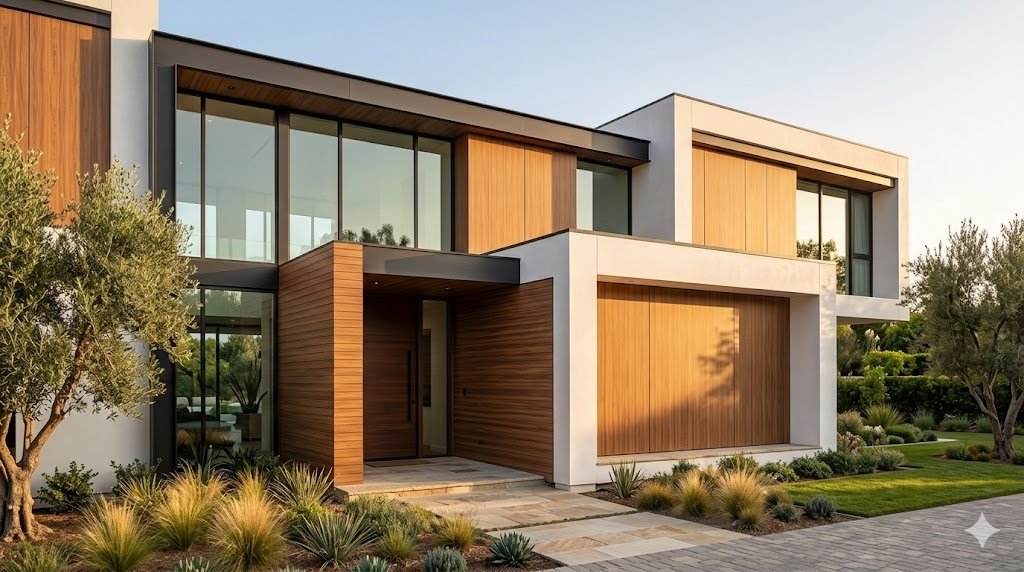
Quick answer: HPL is a solid, homogeneous laminate made from resin-impregnated kraft paper pressed under high heat and pressure. ACP is a sandwich of two thin aluminium skins around a polymer core. HPL generally wins on dent resistance, scratch resistance and long-term colour stability; ACP wins on light weight and lower entry cost. For long-life exterior facades in Indian heat and monsoon, HPL is usually the safer specification.
Table of Contents
- What Each Material Actually Is
- HPL vs ACP: Head-to-Head Comparison
- Fire Safety: The Difference That Matters Most
- Where ACP Still Makes Sense
- Where HPL Is the Better Specification
- Frequently Asked Questions
What Each Material Actually Is
The two products are frequently quoted against each other, but they are built on completely different principles, and that construction explains almost every difference in performance.
High Pressure Laminate (HPL)
HPL is made by stacking multiple layers of kraft paper soaked in thermosetting resin, adding a decorative paper and an overlay, then pressing the stack at roughly 1,400 psi and around 150 degrees Celsius. The result is one solid, dense panel – colour and structure run through the material, not just on its face. Exterior grade adds a double-hardened UV-protective surface.
Aluminium Composite Panel (ACP)
ACP is a sandwich. Two aluminium sheets, usually 0.3mm to 0.5mm thick, are bonded to a core of polyethylene or a mineral-filled compound. The visible surface is a coating – PVDF or polyester – applied to very thin metal. The panel is light and easy to fold, but its strength depends on the bond between skin and core holding up over time.
HPL vs ACP: Head-to-Head Comparison
| Parameter | HPL | ACP |
|---|---|---|
| Construction | Solid, homogeneous laminate | Aluminium skin over polymer core |
| Dent resistance | Very high – no soft core to collapse | Low – visible dents from impact or hail |
| Scratch resistance | High, surface is hardened | Moderate; scratches expose bare metal |
| Colour retention | Excellent with UV-protected exterior grade | Good with PVDF, poor with cheap polyester |
| Fire behaviour | Fire-retardant grades available; chars rather than melts | Depends entirely on core; PE core is a known risk |
| Water and humidity | Very low absorption, dimensionally stable | Metal is unaffected but edges and core can delaminate |
| Weight | Heavier – needs a properly designed sub-frame | Lighter, easier to handle at height |
| Entry cost | Higher | Lower for basic PE-core grades |
| Typical service life | 20-25 years with washing only | 10-15 years, sooner if the coating is low grade |
Fire Safety: The Difference That Matters Most
Facade fires around the world have been traced to polyethylene-cored composite panels, where the core behaves as fuel and the aluminium skin peels away and lets flame travel behind the cladding. Regulators in several countries have restricted PE-core ACP on tall buildings as a result.
HPL is not automatically fireproof either – standard grades are combustible. The difference is that fire-retardant HPL is a recognised, testable specification, and the panel chars in place rather than releasing a molten burning core. For any building above stilt-plus-four floors, or any hospital, school or hotel, insist on documented fire performance from whichever material you choose, and read the test certificate rather than the brochure.
Where ACP Still Makes Sense
Being honest about the alternative builds better projects. ACP remains a sensible choice in specific situations:
- Signage, branding fascias and short-life retail fitouts where the panel will be replaced in a few years anyway.
- Curved and folded geometry, where ACP’s ability to be routed and bent is a genuine advantage.
- Very tight budgets where the structure cannot carry additional dead load without redesign.
- Internal false ceilings and column claddings out of reach of impact.
Where HPL Is the Better Specification
- Ground-level and accessible facades – compound walls, gates, entrance lobbies, school corridors – where dents and trolley impact are inevitable.
- High UV exposure – west and south elevations in Rajasthan, Gujarat and central India, where cheap coatings chalk within a few summers.
- Coastal and high-humidity sites, where salt attacks aluminium coating edges.
- Wood and stone aesthetics, which HPL reproduces convincingly and ACP approximates with a printed film.
- Long-hold assets – your own home, a hospital, a campus – where a 25-year horizon is realistic.
Key Takeaways
- HPL is a solid pressed laminate; ACP is a thin aluminium sandwich with a polymer core.
- HPL resists dents, scratches and UV fading better; ACP is lighter and cheaper up front.
- Core material is the deciding factor for ACP fire safety; ask for test certificates either way.
- Choose ACP for signage, curves and short-life fitouts; choose HPL for long-life facades.
- Compare the two over 20 years of ownership, not on the day of purchase.
Frequently Asked Questions
Is HPL better than ACP?
For long-life exterior facades in Indian conditions, HPL is generally better because it is solid rather than a sandwich, resists dents and scratches, and holds colour longer under strong UV. ACP remains a reasonable choice for signage, curved geometry and short-life commercial fitouts.
Which is more fire safe, HPL or ACP?
Neither is inherently non-combustible. Fire-retardant HPL chars in place and is available with documented test performance, whereas polyethylene-core ACP has been implicated in facade fires because the core burns and spreads flame. Ask for the fire test certificate for the exact product being supplied.
Is HPL heavier than ACP?
Yes. HPL is a dense solid laminate and weighs considerably more per square metre than an ACP panel of similar thickness, so the aluminium sub-frame and anchor design must be sized for it. Any competent facade contractor will account for this.
Which lasts longer on an Indian facade?
A properly installed exterior-grade HPL facade is designed for around 20-25 years with routine washing. ACP performance varies widely by coating – PVDF-coated panels can last well over a decade, while low-grade polyester coatings can chalk and fade in a few summers.
Can HPL and ACP be used together?
Yes, and many designers do. A common approach is HPL at ground level and on high-contact zones where durability matters, with ACP on upper bands or curved features where forming is required.
Related Reading on HPL Maker
Talk to HPL Maker
HPL Maker is an Indian manufacturer of exterior-grade high pressure laminate with an industry-first live camera warranty of up to 25 years. Share your drawings or elevation photos and our team will suggest the right shade, thickness and fixing system for your project.
- Call / WhatsApp: +91 89824 90236
- Email: marketing@hplmaker.com
- Factory & Head Office: 124-126, Vrindavan Palace, Nipania Main Road, Vijay Nagar, Indore – 452010, Madhya Pradesh, India